How to Keep Hand Tools Sharp and Ready for Use
Sharp hand tools matter because they cut cleanly, predictably, and with less effort. A sharp chisel follows a layout line instead of crushing it. A tuned plane takes a shaving instead of scraping. A sharp saw starts and tracks with less wandering. That is not just convenience; it affects accuracy, safety, and how much work you can actually finish before fatigue sets in.
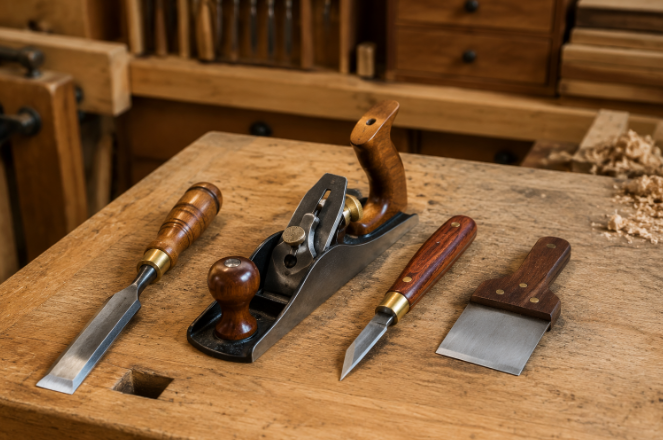
But “ready for use” means more than having a sharp edge. A tool can be sharp and still perform badly if it is dirty, rusty, badly set up, or stored in a way that damages the edge. Good tool maintenance is a system: clean it, protect it, keep the geometry right, and touch it up before it gets too far gone.
What Sharpness Actually Means
Sharpness is not one thing.
There is edge keenness, which is the basic ability of the edge to start cutting. There is edge geometry, which determines how the tool enters the material and how long it stays useful. There is burr control, because a wire edge can feel sharp for a few strokes and then collapse. There is edge retention, which is the ability to keep cutting after initial contact. And there is friction: a well-finished edge may feel smoother and cleaner in some tools, while a more toothy edge can be better for others.
That is why different woodworking hand tools need different edge characteristics. A chisel or plane iron usually wants a polished, durable edge. A scraper needs a burr with a specific shape. A hand saw depends on tooth condition and set, not just “sharpness” in the knife sense. A marking knife wants keenness more than durability. Matching the edge to the tool matters as much as making it sharp.
Recognizing When a Tool Needs Attention
Dullness usually announces itself early if you pay attention.
You will feel increased cutting force. The tool stops slicing and starts pushing material aside. Surfaces come out ragged, crushed, or torn. A chisel begins to slip instead of biting. A plane produces chatter or a glossy, uneven track instead of a smooth shaving. A knife drags or sticks. A saw starts cutting reluctantly, then wanders as you push harder.

Corrosion is another warning. Visible rust, pitting, resin buildup, or a sticky blade feel all reduce performance. A tool can still look usable while cutting poorly because the problem is not always obvious from appearance alone. In practice, the first sign is often feedback: more effort, less control, less clean work.
The Maintenance Cycle
Keeping woodworking hand tools in shape is easier when you separate the jobs.
Cleaning removes dirt, resin, adhesive, and moisture. Flattening restores the reference surfaces that actually support the edge. Sharpening resets the edge geometry when it has worn down. Honing refines the edge after sharpening or between sessions. Stropping can remove the last bit of burr or polish a fine edge, when appropriate for that tool. Rust prevention protects the metal after cleaning. Storage keeps the edge from being damaged before the next use.

These are related but not interchangeable. A clean blade may still be dull. A sharpened chisel may still cut badly if the back is not flattened or the burr is still attached. A tool can be perfectly tuned and still fail if it is thrown in a drawer where the edge gets nicked. The maintenance cycle works only when each step is treated as its own task.
Keeping an Edge Sharp Between Full Sharpenings
The best way to keep hand tools sharp is not to abuse the edge in the first place.
Use the right tool for the material. Avoid twisting a chisel in a cut, prying with a blade, or side-loading a carving tool. That kind of use damages the edge faster than normal cutting does. Clean pitch, resin, and glue residue promptly because sticky buildup increases drag and makes the edge seem dull before it actually is.
Do not wait until a tool is completely dead before touching it up. A quick hone on a stone or a few strokes on a strop is often enough to restore a working edge long before a full sharpening is needed. That habit saves time and metal. It also keeps the tool useful instead of letting it fall into the “needs rescue” category.
The Role of Proper Sharpening Geometry
A sharp edge depends on angle and consistency.
Bevel angle affects both aggression and durability. A lower angle cuts more easily but may chip or roll faster. A higher angle lasts longer but can feel less lively. Micro-bevels and secondary bevels are useful because they let you refine the edge without reworking the whole bevel every time. That is one of the reasons honing and sharpening are not the same thing.
If the angle is wrong, the edge may still be sharp for a moment, but its usable life will be short. For example, a plane iron with an overly acute edge may feel excellent on the first pass and then fail as soon as it meets harder grain. A knife sharpened too steeply may last, but not slice well. Match the geometry to the job instead of chasing the thinnest possible edge.
Common Sharpening Mistakes
One common mistake is removing too much metal. That shortens tool life and turns routine sharpening into unnecessary regrinding. Another is overheating the edge during grinding, which can ruin temper and leave the edge weak even if it looks fine.
Rounded bevels are another problem. If you do not maintain consistent contact on the stone, the bevel can become convex in a way you did not intend. Skipping the burr removal step is just as bad; the edge may seem sharp until the burr folds over in use. A damaged or uneven stone can introduce its own errors, and failing to flatten stones means every later sharpening session starts from a bad surface.
Another subtle error is changing the bevel angle without meaning to. That often happens when the jig, guide, or hand position shifts over time. Polishing alone cannot fix bad geometry. If the edge is worn or rolled, the shape has to be restored before any amount of final polish matters.
Cleaning and Corrosion Control
Dirt and rust do more than make tools ugly. They interfere with smooth cutting, accurate registration, and edge life.
Wipe tools down after use, especially if they have touched resin, sap, glue, or damp stock. A little solvent or the right cleaner can remove buildup before it becomes stubborn. After cleaning, use a light protective oil or rust inhibitor if the tool is plain steel or carbon steel. Avoid thick oil films; they attract dust and create a gummy surface that is unpleasant to handle.
Store tools away from condensation. A cold garage in a humid season is a common place for hidden rust to start. Stainless or coated tools tolerate corrosion better, but they still need cleaning. Carbon steel deserves more deliberate protection because it gives you excellent cutting performance, but it also reacts faster to moisture and neglect.
Storage That Preserves Sharpness
Poor storage can damage an edge faster than use.
A sharp chisel tossed in a drawer will nick itself against other steel. A plane iron left loose in a toolbox can lose its edge just from rattling around. Saw teeth can be bent or dulled by contact with other tools. Even a well-honed marking knife can suffer if the point is exposed.
Use tool rolls, racks, drawer inserts, edge guards, magnetic holders, or separate storage for cutting edges. The goal is simple: prevent metal-to-metal contact and stop tools from moving enough to chip themselves. A safe storage system is part of edge maintenance, not an optional extra.

Setup and Tuning Matter Too
A sharp tool can still perform badly if it is poorly set.
A plane iron needs the right projection and lateral adjustment. The mouth opening affects tear-out and chip clearance. A saw needs proper set and healthy teeth, not just “sharp enough” teeth. A scraper depends on the burr quality and angle. A chisel handle in poor condition can make the tool hard to control. Misalignment at the edge or in the body of the tool can make a good edge seem weak.
This matters because some tools are blamed for dullness when the real issue is setup. If a plane is skipping, it may need tuning, not sharpening. If a scraper is ineffective, it may need a better burr, not a new edge. Sharp tools for woodworking work best when the tool body and cutting edge are both in order.
When to Hone, When to Sharpen, When to Regrind
Use honing for quick touch-ups when the edge is still fundamentally sound but has started to lose bite. Honing is the fast maintenance step that keeps tools ready for use.
Use sharpening when the edge has worn back enough that honing no longer restores cutting performance. That means the edge needs real re-establishment, not just refinement. Use grinding or reprofiling when the tool has serious damage, chip-out, or the wrong geometry from previous work.
A practical test helps: if the tool responds quickly to a fine stone or strop, keep honing. If it takes more and more time to recover performance, you are overdue for full sharpening. If you are removing a lot of metal just to get back to the edge, the shape has drifted too far and needs a more serious reset.
Tool-Specific Maintenance Notes
Chisels should have a flat back near the edge, a consistent bevel, and no micro-chipping. What gets neglected most is the back, which matters as much as the bevel for a clean cut.

Hand planes need a keen iron, a flat sole, and a correct mouth setup. A plane that is clean but not tuned often gets misdiagnosed as dull.
Saws depend on tooth condition, set, and clean gullets. Resin and pitch buildup are common causes of poor cutting. For a saw, “ready” means it starts straight and clears waste without forcing.
Carving tools need edge control and safe storage because their shapes are easy to damage in a drawer or roll. They also benefit from frequent light touch-ups rather than waiting for major dullness.
Scrapers need a fresh, properly turned burr. A scraper with a tired burr is just a piece of steel that rubs.
Knives and marking tools need extreme keenness and protection from contact. They are often neglected because they are small, but they dull and nick just like larger tools.
Building a Maintenance Habit
Sharp tools stay sharp longer when maintenance is routine.
Keep a designated sharpening station with your stones, strop, abrasive, flattening plate, and lubricant in one place. Use a consistent stone progression so you are not improvising every time. Inspect tools before and after use, not just when they fail. Clean them during shutdown so dirt does not harden overnight. Keep supplies organized so touch-ups are easy instead of becoming a project.
If you use preferred angles or setup settings, record them. That makes sharpening hand tools repeatable instead of guesswork. The easier you make maintenance, the more often you will do it before the tool gets into bad shape.
Safety Considerations
Sharp tools are safer because they need less force. Less force means better control, less slipping, less hand fatigue, and a more stable cutting posture. A tool that is only “sort of sharp” is often the worst combination: it still demands effort, but it does not give the clean control of a truly sharp edge.
That is why maintenance is also a safety practice. A clean, well-set, properly sharpened tool is easier to predict. A neglected edge invites pushing, compensating, and forcing the cut, which is exactly when mistakes happen.
Conclusion
Hand tools stay useful when maintenance is treated as a routine system, not a rescue operation. Sharpness is only part of the job. Cleaning, edge geometry, storage, tuning, and early touch-ups all determine whether a tool is actually ready for work.
The practical rule is simple: keep a basic maintenance cycle, protect the edge during storage, and address dullness early. A tool that is cleaned, lightly honed, and stored well will stay sharp enough to do its job when you reach for it.